US Announces Breakthrough in Iran Talks as Nuclear Inspectors Set to Return
US Announces Breakthrough in Iran Talks as Nuclear Inspectors Set to Return
Vice President Vance Highlights Progress Following High-Level Negotiations in Switzerland
The United States says significant progress has been made in ongoing negotiations with Iran after high-level diplomatic talks in Switzerland reportedly produced a framework for continued discussions and a potential return of international nuclear inspectors.
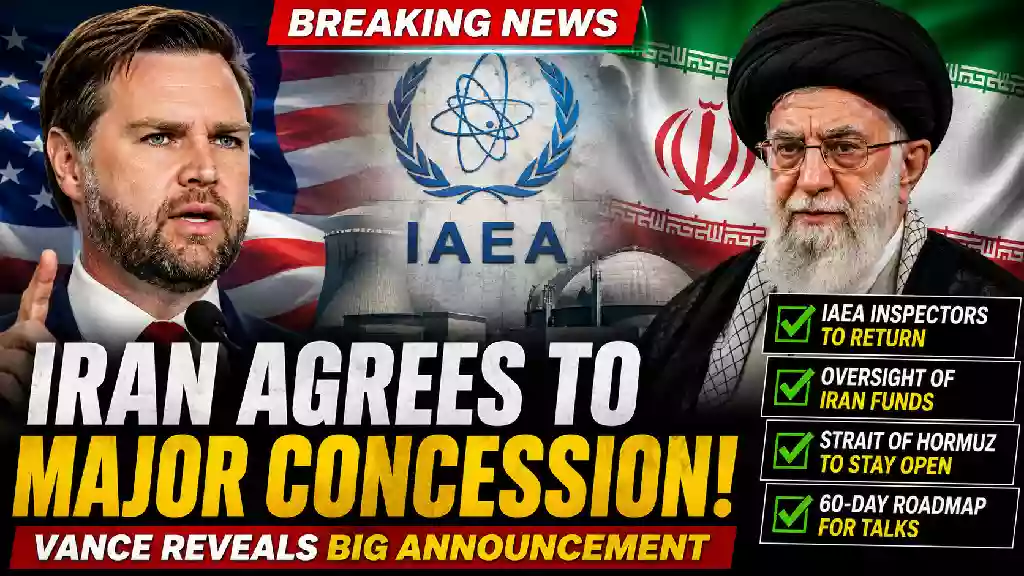
Vice President J.D. Vance announced that Iran has agreed to allow inspectors from the International Atomic Energy Agency (IAEA) back into the country, describing the move as a major step toward increasing transparency around Tehran’s nuclear activities.
The reported breakthrough comes amid broader efforts to reduce regional tensions, address concerns over Iran’s nuclear program, and establish mechanisms aimed at preventing further conflict in the Middle East.
Switzerland Talks Lay Groundwork for Next Phase
Diplomatic talks involving U.S. officials, Iranian representatives, and mediators from Qatar and Pakistan concluded in Switzerland with participants reportedly agreeing on a roadmap for technical negotiations over the next 60 days.
According to statements released by mediators, a committee has been established to oversee the next phase of discussions and help implement the memorandum of understanding reached during the talks.
Officials familiar with the negotiations indicated that discussions focused heavily on regional security issues, including maritime traffic through the Strait of Hormuz and measures intended to reduce the risk of military escalation throughout the region.
The talks are being viewed as one of the most significant diplomatic engagements between the parties in recent years.
IAEA Inspection Access Viewed as Key Development
The most significant announcement from the negotiations involved Iran’s reported willingness to permit IAEA inspectors to return to its nuclear facilities.
Speaking after the talks, Vice President Vance described the development as a major achievement for the United States and the international community.
If implemented, the agreement would allow inspectors to evaluate the status of Iran’s nuclear infrastructure and verify compliance with any future commitments reached through ongoing negotiations.
International monitoring has long been considered one of the most important components of any nuclear agreement involving Iran.
However, while U.S. officials highlighted the reported concession, Iranian authorities had not publicly confirmed the arrangement at the time of reporting, leaving questions about implementation and timing.
Discussions Include Oversight of Iranian Assets
Another major topic discussed during the negotiations involved the management of Iranian funds that could become available under future agreements.
According to Vance, the United States and Qatar would play a role in overseeing certain unfrozen Iranian assets. He also suggested that some of the funds could be directed toward purchasing American agricultural products intended to support civilian needs inside Iran.
Supporters argue that such measures could balance humanitarian concerns with accountability, while critics are expected to closely examine the details of any financial arrangements that emerge from the negotiations.
Strait of Hormuz Remains Strategic Priority
Negotiators also focused on maintaining stability in the Strait of Hormuz, a critical global shipping route that handles a substantial portion of the world’s energy exports.
Officials involved in the talks reportedly worked to establish mechanisms that would help ensure continued freedom of navigation and reduce the risk of disruptions that could impact international markets.
The issue has remained a central concern for governments throughout the region due to its economic and strategic importance.
Lebanon and Hezbollah Continue to Challenge Diplomacy
Despite signs of progress, significant obstacles remain.
The conflict involving Hezbollah and ongoing tensions along Israel’s northern border continue to complicate efforts to achieve broader regional stability.
Negotiators reportedly discussed the creation of a deconfliction mechanism related to Lebanon that could help prevent misunderstandings and reduce the risk of escalation.
Hezbollah leader Naim Qassem reiterated opposition to any continued Israeli military presence in southern Lebanon, while Israeli officials continue to express concerns about security threats posed by the Iran-backed group.
Analysts say developments in Lebanon could become an important test of the broader diplomatic framework currently being negotiated.
Critical 60-Day Window Ahead
President Donald Trump has reportedly described the current arrangement as a 60-day opportunity to determine whether diplomacy can deliver lasting results.
While substantial differences remain between the parties, officials involved in the talks say recent progress offers reason for cautious optimism.
The reported agreement on renewed IAEA access, combined with ongoing discussions surrounding regional security and economic oversight, represents one of the most significant diplomatic developments involving Iran in recent years.
Whether these early gains evolve into a lasting agreement will depend largely on the willingness of all sides to follow through on their commitments during the next phase of negotiations.
For now, the international community will be watching closely as diplomats attempt to transform recent momentum into a durable framework for stability, security, and nuclear transparency in the Middle East.
#Iran #JDVance #IAEA #NuclearTalks #MiddleEast #BreakingNews #USIran #Diplomacy #Geopolitics #WorldNews