FDA Approves New Blood Test That Could Expand Early Colorectal Cancer Screening
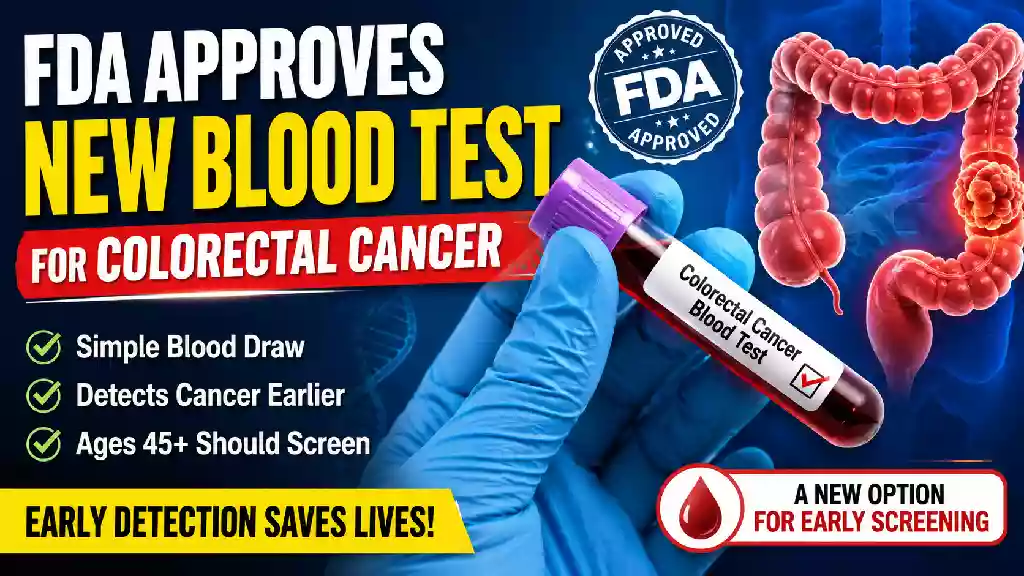
A new FDA-approved blood test offers a convenient screening option for colorectal cancer by detecting tumor-related DNA fragments in the bloodstream. Health experts say the test may increase early detection rates, although colonoscopy remains the gold standard for preventing colorectal cancer.
FDA Approves New Blood Test That Could Expand Early Colorectal Cancer Screening
Simple Blood Test Offers New Option for Detecting Colon Cancer Though Experts Say Colonoscopy Remains the Best Defense
The U.S. Food and Drug Administration (FDA) has approved a new blood test that could make colorectal cancer screening more accessible for millions of Americans. Designed to detect DNA fragments released by colorectal tumors into the bloodstream, the test offers a less invasive alternative for adults who may be reluctant to undergo a colonoscopy.
Medical experts say the approval is an important step toward improving screening rates, particularly as colorectal cancer continues to affect a growing number of younger adults. While the new screening option makes early detection more convenient, physicians emphasize that it does not replace the effectiveness of a colonoscopy in preventing the disease.
A New Screening Option for Adults 45 and Older
The FDA-approved blood test allows eligible patients to be screened during a routine doctor’s visit with a simple blood draw. Health officials recommend that all adults 45 years of age and older receive regular colorectal cancer screening, following updated national guidelines that lowered the recommended starting age from 50.
According to the American Cancer Society, nearly 160,000 Americans are expected to be diagnosed with colorectal cancer this year, while more than 55,000 people are projected to die from the disease. Early detection significantly improves treatment outcomes, making routine screening one of the most effective tools for reducing deaths.
Despite these recommendations, only about two-thirds of eligible Americans are current with their screenings, leaving millions at risk of delayed diagnosis. The newly approved blood test could encourage more people to participate in life-saving cancer screening.
How the FDA-Approved Blood Test Works
The new screening method analyzes fragments of DNA circulating in the bloodstream that may have been released by colorectal tumors. The technology provides a convenient alternative for individuals who are unable or unwilling to undergo traditional screening procedures.
However, physicians caution that patients should understand the limitations of the test. While it successfully detects approximately 80 percent of colorectal cancers, colonoscopies identify more than 95 percent of cases and provide an additional benefit that blood tests cannot offer.
Unlike a blood test, a colonoscopy enables doctors to locate and remove precancerous polyps before they develop into cancer, making it both a diagnostic and preventive procedure.
Why Colonoscopy Still Matters
Healthcare professionals continue to describe colonoscopy as the gold standard for colorectal cancer screening.
Although many patients delay the procedure because they fear the bowel preparation or find the examination uncomfortable, doctors note that modern preparation methods are much easier than they were in the past, with several lower-volume options now available.
Experts encourage patients to think of colonoscopy as an opportunity to prevent cancer rather than simply detect it. Removing abnormal growths before they become cancerous can dramatically reduce the likelihood of developing colorectal cancer later in life.
For individuals who simply cannot complete a colonoscopy, however, the FDA-approved blood test provides a valuable alternative that is far better than avoiding screening altogether.
Rising Colorectal Cancer Cases Among Younger Adults
Doctors remain concerned about the steady increase in colorectal cancer diagnoses among younger adults, a trend that has continued for decades.
Researchers believe environmental and lifestyle factors may be contributing to the rise, with growing attention focused on diets high in ultra-processed foods. According to medical experts, eating habits established during childhood and adolescence may influence colorectal cancer risk years later.
Although research is ongoing, physicians recommend maintaining a healthy lifestyle while following recommended screening guidelines to improve early detection and reduce long-term risk.
Family History Can Change Screening Recommendations
Individuals with a close family history of colorectal cancer may need to begin screening earlier than age 45.
Doctors recommend discussing family medical history with a healthcare provider, as screening may begin years before the standard recommendation depending on when a close relative was diagnosed. In many cases, insurance plans cover earlier screening for patients with increased hereditary risk.
Early Screening Saves Lives
The FDA’s approval of this new blood test represents another important advancement in the fight against colorectal cancer by expanding access to screening for patients who may otherwise skip testing. While specialists continue to recommend colonoscopy as the most effective way to prevent colorectal cancer, the newly approved blood test offers another pathway to detect the disease earlier and improve patient outcomes.
Health experts agree that no matter which screening method is chosen, getting tested at the recommended age can make a life-saving difference. As colorectal cancer continues to impact thousands of families each year, increasing participation in routine screening remains one of the most effective strategies for reducing deaths from the disease.
#ColorectalCancer #ColonCancer #FDA #CancerScreening #BloodTest #EarlyDetection #HealthNews #CancerAwareness #MedicalInnovation #Colonoscopy