Oklahoma County Child Removals Rise 27% to Five-Year High
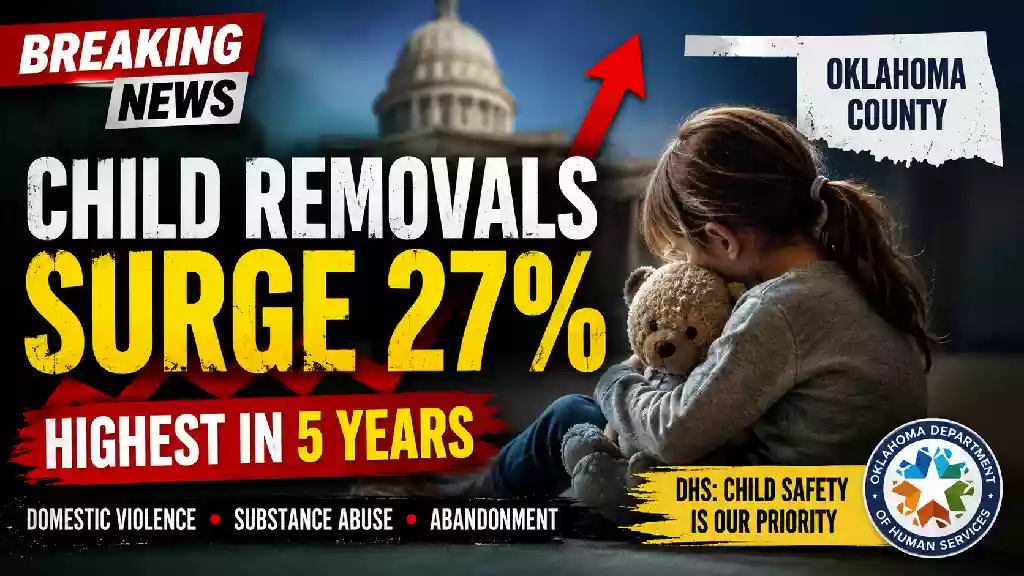
Oklahoma County saw a 27% increase in child removals in 2025, the largest rise in five years, while Oklahoma DHS cited domestic violence, substance abuse, abandonment and other family safety concerns as contributing factors.
Oklahoma County Child Removals Rise 27% to Five-Year High
Oklahoma County Child Removals Surge 27% as DHS Points to Growing Family Safety Concerns
Oklahoma County recorded a 27% increase in child removals in 2025, marking the largest annual increase in five years, according to newly released information from the Oklahoma Department of Human Services (DHS). The sharp rise comes as child removals declined by 2% statewide, making the increase in Oklahoma County particularly notable.
The growing number of children entering state custody is raising questions about the conditions facing families in Oklahoma County and what is contributing to the increase. DHS officials say there is no single cause, pointing instead to a combination of domestic violence, substance abuse, abandonment and other circumstances that can threaten a child’s safety.
Child Removals Reach Five-Year High
The 27% increase represents the largest jump in necessary child removals in Oklahoma County over the past five years. The increase follows a 7% rise in 2023 and an 18% increase in 2024, showing that the number has continued to climb over several years.
The Oklahoma County numbers contrast sharply with the statewide trend. While removals increased significantly in the county, Oklahoma as a whole recorded a 2% decrease during the same period. DHS described the situation as complicated, with several factors contributing to the difference.
DHS Cites Multiple Risks Facing Children
According to DHS, children entering state custody may be facing a range of serious circumstances at home. Some cases involve immediate concerns about abuse or neglect, while others involve substance abuse, domestic violence or abandonment.
Officials also said some children do not have a safe and willing adult available to care for them. In other situations, parents may reach a point where they are unable to provide adequate care, leaving the child without a safe home environment.
DHS said these challenges are also affected by the number of children living in Oklahoma County, adding another factor to the county’s overall child welfare figures.
Removing Children Is the Highest Level of Intervention
DHS stressed that taking a child from a home is not the agency’s preferred first step. Child removal is considered the highest level of intervention and occurs when officials determine that a child cannot safely remain at home.
The agency said it does not want children unnecessarily entering the state system. However, DHS also considers the child welfare system a source of support for families experiencing serious problems that may place children at risk.
This distinction is important as Oklahoma County addresses the increase. The figures represent cases in which DHS determined that children were unsafe because of conditions or behavior within the family and that the situation could not be adequately controlled while the child remained at home.
Reunification Remains a Major Goal
A child entering state custody does not necessarily mean that the separation from parents will be permanent. DHS said its goal is to return children to their families whenever it can be done safely.
According to the agency, approximately 60% of children in its care are eventually reunified with their families. That means many cases involve efforts to address the problems that led to removal while working toward a safe return home.
The reunification figure underscores the broader role of the child welfare system: protecting children from immediate danger while providing families with opportunities to address the circumstances that led to intervention.
Increase in Hotline Reports Also Plays a Role
DHS also identified an increase in calls to its child welfare hotline as another factor behind the numbers. Officials said about 60% of hotline calls do not reach the level requiring intervention, while approximately 40% do.
The number of calls that result in intervention is growing, according to DHS.
For Oklahoma County, the 27% increase in child removals represents a significant shift in the local child welfare landscape. With domestic violence, substance abuse, abandonment and concerns about abuse or neglect among the factors identified by DHS, the county’s child welfare system faces continued pressure to protect children while helping families create safer conditions.
#OklahomaCounty #OklahomaNews #ChildWelfare #ChildSafety #ChildRemovals #OklahomaDHS #ChildProtection #FosterCare #ChildCustody #FamilySupport