White House and Israel Reject New Espionage Claims Amid Growing Debate Over Intelligence Sharing
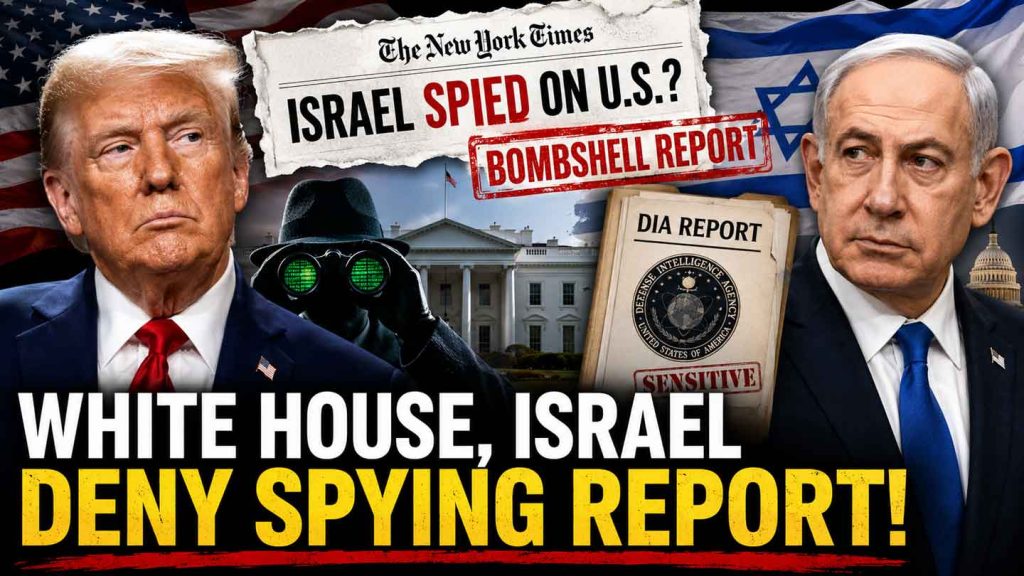
White House and Israel Reject New Espionage Claims Amid Growing Debate Over Intelligence Sharing
Officials Dismiss Report Alleging Israeli Spying as Tensions Rise Over US-Iran Negotiations
The White House and the Israeli government are pushing back against a report alleging that Israel may have conducted intelligence-gathering activities targeting U.S. operations, calling the claims inaccurate and lacking credible sourcing.
The controversy emerged following media reports citing an alleged Defense Intelligence Agency (DIA) assessment suggesting Israeli intelligence may have sought information about U.S. activities and diplomatic efforts involving Iran. Both Washington and Jerusalem have strongly denied the allegations, emphasizing the close relationship between the two allies.
The debate comes at a sensitive time as the United States continues diplomatic efforts aimed at addressing tensions with Iran while maintaining strong strategic ties with Israel throughout the Middle East.
White House Rejects Report as False
According to the discussion, White House officials dismissed the report entirely, arguing that the story was based on information from sources who lacked direct knowledge of the situation.
The administration characterized the allegations as inaccurate and maintained that the claims do not reflect current intelligence assessments or ongoing cooperation between the United States and Israel.
Israeli officials issued similar denials, with the Israeli Embassy stating that Israel does not conduct intelligence collection operations against American government officials and instead focuses its intelligence efforts on hostile actors and security threats facing the nation.
Intelligence Experts Say Espionage Concerns Are Not Uncommon
Despite the official denials, former Navy intelligence officer Jack Posobiec noted that intelligence professionals have long recognized that even close allies sometimes seek additional information regarding one another’s activities.
Posobiec explained that throughout military and intelligence operations, questions often arise regarding how much information partner nations possess and whether allied governments are attempting to gain greater insight into ongoing operations.
According to Posobiec, such concerns are not unique to Israel and can arise among many allied nations around the world.
He suggested that intelligence agencies naturally seek to gather information that could affect their national interests, particularly during periods of heightened geopolitical uncertainty.
U.S.-Israel Relationship Remains Strong
The allegations have generated attention because of the historically close relationship between the United States and Israel.
For decades, the two nations have maintained extensive military, intelligence, and diplomatic cooperation. Joint efforts have included counterterrorism operations, intelligence sharing, missile defense initiatives, and regional security partnerships throughout the Middle East.
Experts note that while intelligence disagreements occasionally arise between allies, the broader strategic relationship between Washington and Jerusalem remains one of the strongest partnerships in international affairs.
Both governments continue to coordinate closely on issues involving Iran, regional security, and counterterrorism efforts.
Iran Negotiations Add New Layer to the Debate
The timing of the report has added additional intrigue because it coincides with ongoing discussions involving Iran.
Former intelligence officials and political analysts have noted that negotiations with Iran remain among the most closely watched diplomatic efforts in the world today. Any information regarding U.S. strategy, military planning, or diplomatic positions could carry significant importance for countries throughout the region.
Posobiec suggested that the alleged concerns highlighted in the report may be linked to broader questions surrounding American negotiations with Iran and how those discussions could impact Israeli security interests.
The issue underscores the complex balance policymakers must maintain between diplomacy, military preparedness, and alliance management in a volatile region.
Intelligence Gathering Among Allies Remains Sensitive Topic
Historically, allegations involving intelligence gathering among allied nations have periodically surfaced, often creating temporary diplomatic friction even when broader relationships remain intact.
National security experts frequently point out that intelligence organizations are tasked with protecting their countries’ interests, which can sometimes lead to uncomfortable questions even among friendly governments.
While official denials are common in cases involving alleged espionage, intelligence professionals acknowledge that many aspects of international intelligence operations remain classified and rarely become public.
As a result, reports involving intelligence activities often generate significant debate but can be difficult to independently verify.
Free Speech Debate Overshadowed by National Security Discussion
The espionage discussion followed a separate conversation regarding protests outside the Turning Point USA Women’s Leadership Summit in San Antonio.
Organizers criticized demonstrators for what they described as hostile behavior toward attendees while emphasizing their support for free speech and open debate.
However, much of the attention quickly shifted to the national security questions raised by the intelligence report and the competing claims from government officials and former intelligence personnel.
Questions Likely to Continue
As both the White House and Israeli officials continue to reject the allegations, questions surrounding intelligence cooperation, diplomacy with Iran, and national security priorities are likely to remain topics of public discussion.
Whether additional information emerges regarding the report remains unclear, but the controversy highlights the ongoing challenges governments face when balancing intelligence operations, international alliances, and diplomatic negotiations in an increasingly complex global environment.
#Israel #WhiteHouse #NationalSecurity #Espionage #Intelligence #MiddleEast #Iran #ForeignPolicy #USIsraelRelations #BreakingNews