US Announces New Tariffs on Canada Amid Forced Labour Concerns and Ongoing Trade Negotiations
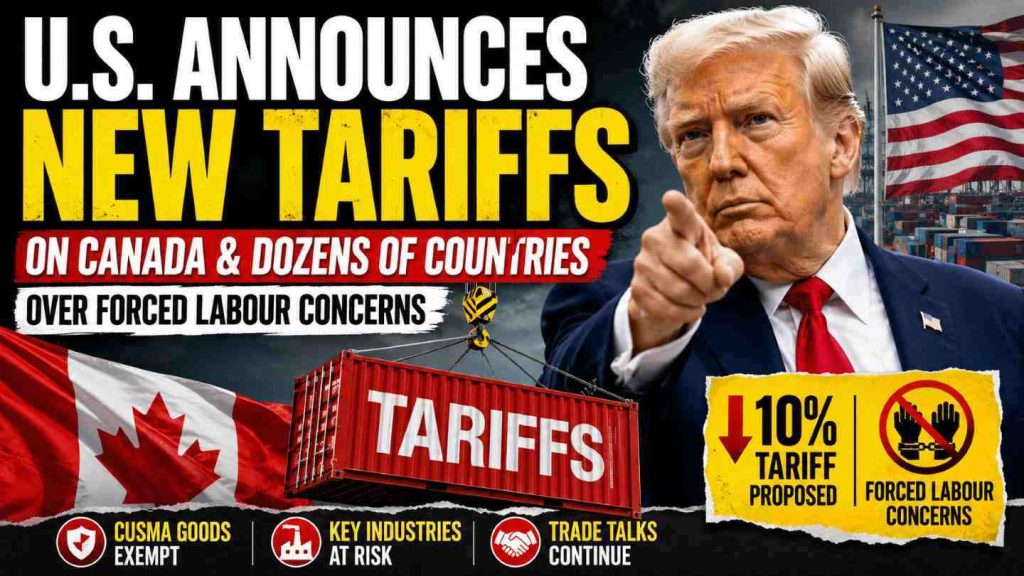
US Announces New Tariffs on Canada Amid Forced Labour Concerns and Ongoing Trade Negotiations
New U.S. Tariff Proposal Targets Canada and Dozens of Other Countries
The United States has announced a new round of proposed tariffs targeting Canada and nearly 60 other countries as part of an investigation into forced labour compliance. The announcement came just hours after Canadian Trade Minister Dominic LeBlanc met with U.S. Trade Representative Jameson Greer in Washington, highlighting growing tensions in North American trade relations.
The proposed tariffs are part of a broader U.S. effort to ensure countries are effectively enforcing measures to prevent products made with forced labour from entering their markets. According to U.S. officials, Canada has policies in place to address forced labor concerns but is not fully implementing them, prompting the recommendation for additional trade penalties.
What the Proposed Tariffs Mean for Canada
Under the proposal, Canada could face a 10% tariff on certain exports to the United States. However, significant exemptions would apply. Products covered under the Canada-United States-Mexico Agreement (CUSMA), formerly known as USMCA, would not be affected. Since approximately 85% of Canadian exports to the U.S. fall under CUSMA provisions, much of Canada’s trade activity could remain protected.
Additionally, products already subject to Section 232 tariffs, including steel, aluminum, and certain metals, would be exempt from the new tariff proposal. These industries already face tariffs as high as 50%, and adding another 10% would have significantly increased costs for manufacturers and exporters.
Despite these exemptions, several Canadian industries could still be affected if the tariffs move forward.
Key Industries Facing Potential Impact
One of the sectors likely to feel the greatest impact is Canada’s softwood lumber industry. Softwood lumber exports already face substantial duties and tariffs, with combined rates approaching 50% in some cases. The proposed 10% tariff could push total duties to nearly 60%, creating additional pressure on Canadian producers and exporters.
Other industries potentially affected include furniture manufacturing, heavy machinery production, and vehicles primarily manufactured in Canada. Products that are not CUSMA-compliant and already subject to existing tariffs could see their rates double from 10% to 20%.
Business leaders and trade experts are closely monitoring developments, as increased tariffs could reduce competitiveness, raise costs for consumers, and disrupt established supply chains between Canada and the United States.
Trade Talks Continue Despite Uncertainty
The announcement comes during ongoing trade discussions between Canadian and American officials. Dominic LeBlanc described himself as “eternally optimistic” following his meeting with Jameson Greer, although he provided limited details regarding Canada’s proposals to address American concerns.
Several longstanding issues remain points of contention between the two countries. These include Canada’s supply management system, provincial alcohol sales restrictions, and regulations such as the Online News Act that affect major U.S. technology companies.
Canadian officials have indicated they are willing to discuss solutions, but specific proposals have not been publicly disclosed.
July Deadline May Be Missed
A key deadline in the CUSMA review process is approaching on July 1. However, both Canadian and American officials have acknowledged that a formal agreement is unlikely to be reached by that date.
Prime Minister Mark Carney has downplayed concerns about missing the deadline, noting that the United States currently faces a greater number of trade disputes with Mexico than with Canada. According to Canadian officials, the U.S. has approximately 30 trade concerns involving Canada compared to roughly 60 issues involving Mexico.
Trade experts suggest that negotiations could extend well beyond the July deadline as all parties work through complex economic and regulatory challenges.
Mexico’s Challenges Add Complexity to North American Trade Talks
While Canada focuses on tariff threats and trade reforms, Mexico faces additional challenges in its relationship with the United States. One major issue involves U.S. allegations concerning organized crime and the possible extradition of a governor from Mexico’s Sinaloa region.
These tensions have complicated negotiations and may explain why U.S. officials are prioritizing discussions with Mexico before moving more aggressively on Canadian trade issues.
Nevertheless, Canada remains vulnerable to sudden policy changes from Washington, particularly as former President Donald Trump continues to advocate for stronger trade enforcement measures and increased tariffs on foreign imports.
Outlook for Canada-U.S. Trade Relations
For now, the proposed tariffs remain under review and have not been officially implemented. A final decision is expected by mid-July, leaving businesses, manufacturers, and policymakers on both sides of the border watching developments closely.
If approved, the tariffs could significantly affect key Canadian export industries and reshape portions of the Canada-U.S. trading relationship. However, with negotiations ongoing and several exemptions already identified, the final outcome remains uncertain.
As North America’s largest trading partners continue discussions, the coming weeks could prove crucial for the future of cross-border commerce and economic cooperation.
#USTariffs #CanadaTrade #CUSMA #USMCA #TradeWar #InternationalTrade #CanadianEconomy #SoftwoodLumber