Nepal Flood Horror: Rescue Pilot Tells of Survivors Missing Families and Body Recoveries
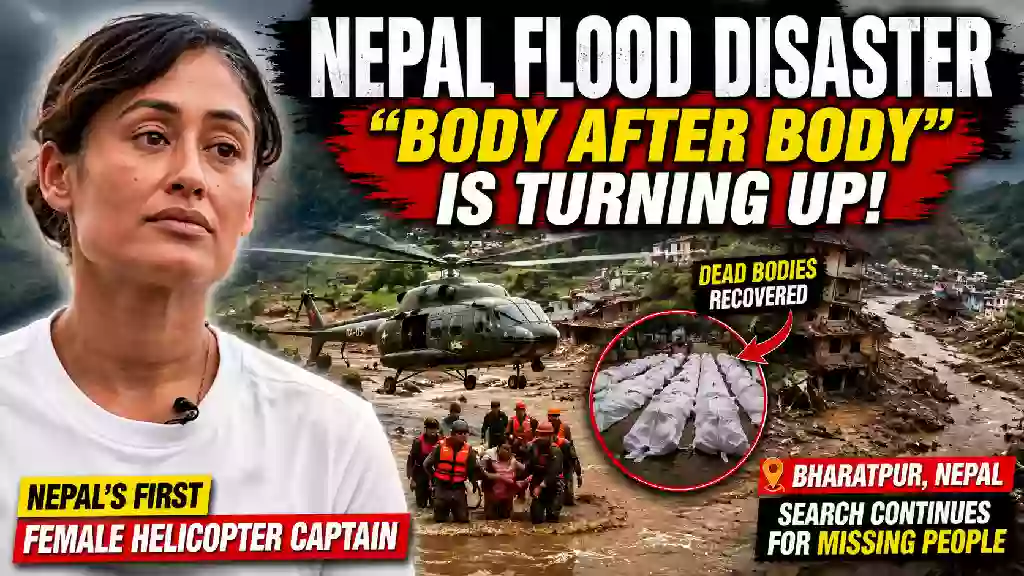
Nepal’s first female helicopter captain Priya Adhikari describes the challenges of carrying out rescue missions following the devastating Nepal flood disaster.
Nepal Flood Horror: Rescue Pilot Tells of Survivors Missing Families and Body Recoveries
Nepal’s Rescue Operation Enters a Grim New Phase
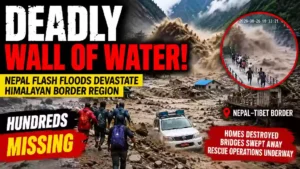
Nepal is facing a devastating humanitarian crisis after catastrophic flooding and mudslides destroyed communities, swept away roads and left families searching for missing loved ones. As rescue crews continue their work, the scale of the destruction is becoming clearer, with helicopter pilots describing dangerous conditions and recovery teams finding victims in areas hit hardest by the disaster.
Among those on the front lines is Priya Adhikari, described in the report as Nepal’s first female helicopter captain. She has flown around 100 rescue missions in just a few days, helping evacuate people from some of the worst-affected areas.
Despite the exhaustion, Adhikari says rescue crews remain focused on getting survivors to safety.
20 Helicopters Navigate a Dangerous Valley
The rescue operation has presented enormous challenges for helicopter crews. Adhikari described a small valley where numerous people had gone missing and where as many as 20 helicopters were operating continuously.
Pilots had to communicate frequently to coordinate their movements, particularly when several helicopters were attempting to land at the same evacuation points.
The difficult terrain added another major risk.
Areas that appeared to be solid ground from the air were actually covered in deep, unstable mud. Adhikari explained that helicopters could potentially sink if pilots attempted to land and leave the aircraft normally.
Instead, pilots sometimes had to remain on power while rescuers worked around them.
Survivors Become a Symbol of Hope
Amid the destruction, Adhikari said the survivors she encounters give her a reason to smile.
She described seeing rescued people inside her helicopter, some lying down and struggling even to open their eyes. For her, telling them that they had survived is an important part of the mission.
The disaster has been compared in the report with Nepal’s devastating 2015 earthquake, although Adhikari emphasized the different nature of the current catastrophe. This time, an especially hard-hit area has suffered an enormous loss of life within a relatively concentrated region.
More Than 200 People Evacuated From Timore
The Timore area became one of the major focuses of the rescue operation. Adhikari said more than 200 people were evacuated from the area during the first and second days of the operation.
Five or six helicopters, along with an Augusta helicopter, were involved in evacuating survivors.
People who were injured or who had survived the disaster were taken out as quickly as possible, including local residents and foreigners.
One particularly remarkable rescue involved a young girl who was found alive after being trapped for approximately two and a half days. She was subsequently taken to a hospital in Kathmandu.
For rescuers, stories like hers stand in stark contrast to the scenes of devastation surrounding them.
Families Continue Searching for Missing Relatives
The rescue mission has also become deeply personal for Adhikari. She described trying to locate missing people whose stories had stayed with her, including the parents of a woman identified in the report as Radhika.
She also searched for two Nepalese men, one associated with the Isha Foundation as a volunteer and another who worked at a bank in Timore.
Adhikari acknowledged the emotional weight of searching for people when there may be no signs of life.
The experience of repeatedly seeing bodies from the air has made the disaster particularly difficult for rescue crews.
“Body After Body” Recovered Near Bharatpur
The disaster has created another enormous challenge: recovering and identifying those who died.
According to the report, floodwaters carried bodies downstream toward the valley around Bharatpur. Authorities have been conducting search and recovery operations in nearby rivers, where they have continued recovering victims.
At a center visited by reporters, families were trying to determine whether recovered bodies belonged to their missing relatives.
For many families, the search has brought heartbreaking uncertainty.
One father described searching for his son, a hydropower plant worker who was married and had two children. The family had not found his body and continued looking in other locations.
Mass Grave Prepared for Unidentified Victims
Authorities in Bharatpur have also been preparing additional space at a mass grave site for bodies that remain unidentified.
The recovery operation continues as officials attempt to identify victims and reunite remains with their families. If relatives do not come forward to claim unidentified remains, the bodies may ultimately be buried at the site.
The scenes reflect the enormous human cost of the disaster and the difficult work still facing Nepal’s recovery teams.
Sapru Besi Left Buried Under Mud and Debris
The town of Sapru Besi has suffered extensive destruction. What was once a bustling market district containing businesses and homes has been largely wiped out.
A major road connecting the Tibet border area with Kathmandu once passed through the town. That route has now been destroyed.
The area was also known as a destination for Hindu and Buddhist pilgrims as well as international trekkers. The report says 15 Australian trekkers had been reported missing in the area, along with dozens of other foreigners.
The full number of deaths in the town was not clear in the report.
A Disaster Far From Over
The devastation across Nepal illustrates the enormous challenges facing rescue and recovery teams. Helicopter crews are navigating unstable terrain, search teams are recovering victims, and families are still waiting for answers about missing relatives.
For Captain Priya Adhikari and the rescuers working alongside her, the mission continues despite exhaustion and difficult conditions.
Every survivor brought out of the disaster zone represents a moment of hope. But with communities buried under mud, roads destroyed and families still searching for loved ones, Nepal’s recovery will be a long and painful process.
#NepalFloods #Nepal #NepalDisaster #NepalRescue #HelicopterRescue #PriyaAdhikari #FloodDisaster #DisasterRelief #Bharatpur #SapruBesi #MissingPersons