Meta Social Media Settlement Could Change How Kids Use Facebook and Instagram
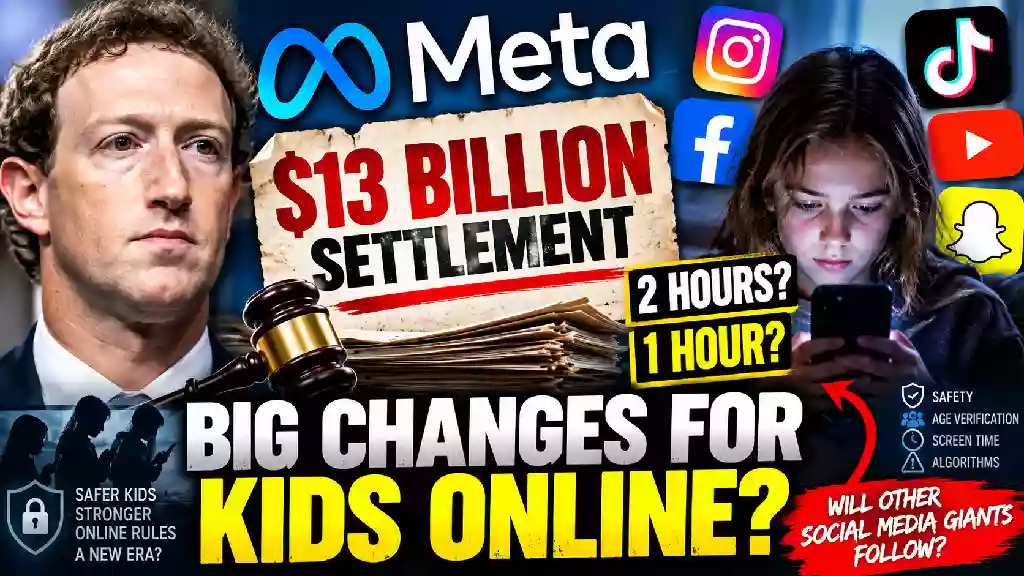
Meta’s proposed $13 billion settlement could introduce new restrictions on children’s social media use, including limits on daily screen time and stronger online safety measures.
Meta Social Media Settlement Could Change How Kids Use Facebook and Instagram
Meta’s Kids’ Social Media Deal Could Force a Major Industry-Wide Shakeup
Meta’s massive settlement over children’s social media use could trigger sweeping changes across the technology industry, putting new pressure on companies such as TikTok, YouTube and Snap to strengthen protections for young users.
The agreement would require Meta to introduce new limits on how long children can use platforms including Facebook and Instagram. It also raises a much bigger question: Could this settlement become the blueprint for how social media companies protect kids across the United States?
Meta Faces Billions in Payments and New Restrictions
Under the agreement described in the case, Meta would guarantee nearly $13 billion to dozens of states while introducing restrictions aimed at limiting children’s social media use.
One of the most significant measures would cap children’s daily use of Meta’s platforms at two hours.
That limit could potentially fall to just one hour per day if TikTok and YouTube agree to implement similar restrictions. The settlement also includes the possibility of Meta paying an additional $5 billion if competing companies make comparable financial commitments.
The proposed changes put Meta at the center of a growing national debate over social media addiction, screen time and child online safety.
States Want Other Social Media Companies to Follow
California Attorney General Rob Bonta has argued that Meta should not be the only major technology company facing pressure to change how its platforms operate.
The broader objective is to establish similar protections across the social media industry, including TikTok, YouTube and Snap.
That could make the Meta settlement more significant than its financial value alone. If other companies adopt comparable restrictions, the agreement could create a domino effect that changes expectations for children’s online safety across multiple platforms.
Age Verification Could Be One of the Biggest Challenges
One of the most difficult parts of protecting children online is determining who is actually a child.
The settlement calls for steps to verify users’ ages, but age authentication remains a major challenge. Young users have repeatedly found ways around age restrictions, parental controls and platform settings.
The discussion surrounding the settlement points to potential use of artificial intelligence and behavioral analysis. Platforms could examine how users interact with their services, who they communicate with and their patterns of activity to estimate their age.
But questions remain about whether these systems will accurately identify children without creating additional privacy concerns.
Simply asking users to enter their birth date has clearly not solved the problem.
Critics Say Screen-Time Limits Don’t Go Far Enough
Perhaps the biggest criticism of the agreement is that limiting the amount of time children spend on social media does not necessarily eliminate the dangers they may encounter while they are online.
Cheryl Brown, whose daughter died by suicide after cyberbullying, has advocated for stronger protections for young people. She criticized the settlement for not doing more to address recommendation algorithms that can potentially push children toward harmful content or dangerous interactions.
That concern highlights a fundamental issue with the debate.
A child could spend only one or two hours on a platform and still encounter harmful material if the platform’s recommendation system directs them toward it.
The Algorithm Debate Continues
Social media algorithms remain one of the most controversial aspects of children’s online safety.
Recommendation systems are designed to determine what users see next, while features such as infinite scrolling and autoplay can encourage people to continue consuming content.
The attorney interviewed in the source material argued that these features remain important concerns even with limits on daily usage. Adults can also struggle to control their social media consumption, making the challenge potentially even greater for younger users.
The issue therefore extends beyond simply asking how many hours children should be allowed to spend online. It also involves examining what they see during those hours and how platforms are designed to keep them engaged.
Parents Could Gain More Control
Another major theme of the settlement is giving parents greater control over how children use social media.
Restrictions and default settings could give parents more tools to manage their children’s access and exposure to potentially inappropriate material.
However, critics argue that parental controls alone cannot solve every problem.
Children can sometimes bypass restrictions, while platforms themselves control the algorithms, recommendations and engagement features that determine much of the online experience.
A Potential Turning Point for Social Media
Meta’s settlement could become an important test of whether government pressure, financial penalties and stronger platform restrictions can produce meaningful improvements in children’s online safety.
The agreement addresses several major concerns, including screen time, age verification, parental controls and youth exposure to social media.
But major questions remain about algorithms, cyberbullying, infinite scrolling, autoplay and the recommendation of potentially dangerous content.
Ultimately, the biggest impact could come if other social media companies follow Meta’s lead.
If TikTok, YouTube, Snap and other platforms adopt similar protections, the settlement could help establish a new standard for kids’ social media safety—and fundamentally change how children experience social media.
#Meta #SocialMedia #KidsOnline #ChildSafety #OnlineSafety #Facebook #Instagram #TikTok #YouTube #Snap #Cyberbullying #SocialMediaAddiction