General Jack Keane: US May Need to Return to Full Combat Operations Against Iran
General Jack Keane: US May Need to Return to Full Combat Operations Against Iran
Former Army General Says Diplomacy Has Failed and Military Action May Be Necessary
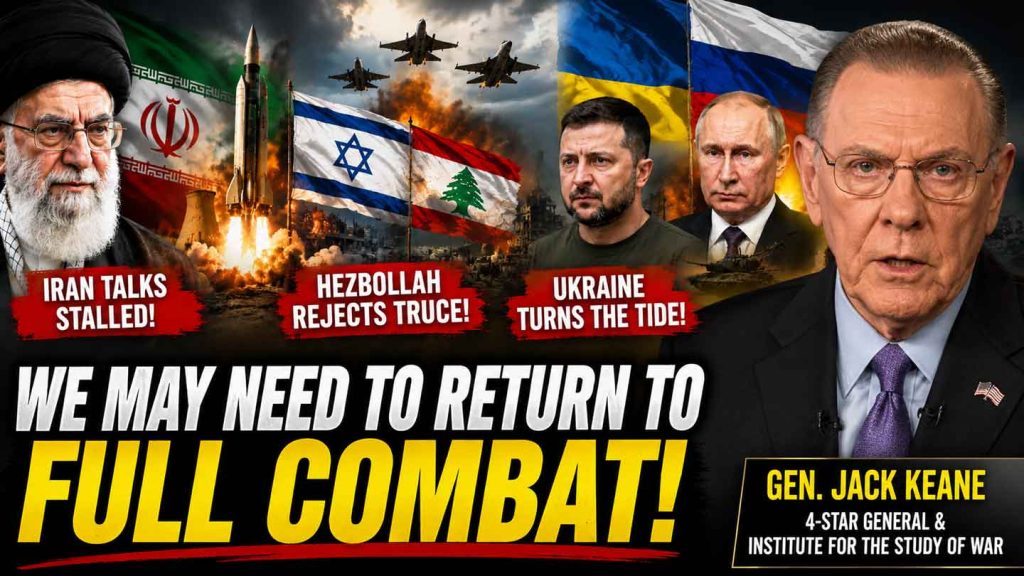
Retired four-star General Jack Keane says the United States may need to resume full-scale military operations against Iran after weeks of stalled negotiations and continued instability across the Middle East. During a recent television interview, Keane argued that diplomatic efforts have produced little progress and warned that Iran may be using peace talks as a delaying tactic.
Keane, who serves as chairman of the Institute for the Study of War and a senior strategic analyst, believes the current situation has reached a critical point after nearly two months of negotiations.
Eight Weeks of Negotiations Produce Little Progress
According to Keane, the current diplomatic process began after Iran suggested negotiations following disruptions in the Strait of Hormuz, one of the world’s most important oil shipping routes. Iranian officials reportedly indicated a deal could be reached within two weeks that would reopen the vital waterway.
However, nearly eight weeks later, Keane says little has changed.
He argues that Iran’s leadership may be attempting to stretch out negotiations in hopes of avoiding additional military pressure while waiting for changing political conditions in the United States.
Keane expressed concern that prolonged talks could allow Iran to rebuild military capabilities while avoiding meaningful concessions. He also pointed to a history of Iran allegedly violating previous agreements as a reason for skepticism about future diplomatic arrangements.
Calls for a Return to Military Operations
The retired general stated that military planners believed approximately two weeks of operations remained when combat actions were paused. He now believes the United States and its allies have gathered additional intelligence during the pause and identified new targets.
Rather than conducting limited strikes, Keane suggested that any renewed military campaign should be comprehensive.
He argued that Iran would likely retaliate regardless of the size of a military operation, making a larger effort more effective in degrading military capabilities and increasing pressure on the regime.
Keane believes combining military pressure with economic sanctions could further weaken Iran’s position and potentially accelerate political instability within the country.
Ukraine Turning the Tide Against Russia
The discussion also focused on the ongoing war in Ukraine, where Keane offered a far more optimistic assessment for Ukrainian forces than many recent headlines have suggested.
According to Keane, Russia’s latest spring and summer offensive has failed to achieve its objectives. He claims Ukraine has regained momentum on the battlefield and is now successfully recapturing territory in several areas.
One of the most significant developments, he noted, is Ukraine’s ability to adapt to modern drone warfare. Ukrainian forces have reportedly found ways to suppress enemy drone operations while effectively using armored vehicles, artillery, and infantry in coordinated maneuvers.
Keane described this as a major shift in the conflict and evidence that Ukraine continues to innovate on the battlefield.
Russia Facing Military and Economic Challenges
Another key point raised by Keane involves Russia’s growing casualty problem.
He stated that Russian forces are now suffering losses faster than they can replace personnel, creating long-term challenges for the Kremlin’s military strategy.
In addition to battlefield setbacks, Keane argued that Russia’s economy is under increasing pressure despite public statements from Russian leaders portraying economic strength.
He dismissed claims of strong economic growth and suggested that sanctions and war-related costs continue to strain the country’s financial position.
Ukraine Requests Patriot Missile Technology
Keane also highlighted Ukraine’s request to manufacture Patriot PAC-3 missile interceptors domestically.
Ukraine has successfully developed several indigenous weapons systems and now seeks licensing rights to produce advanced defensive missiles. According to Keane, this approach would reduce reliance on American manufacturing while helping Ukraine defend against Russian ballistic missile attacks.
He described the proposal as a practical solution that would allow Ukraine to strengthen its air defense capabilities without requiring significant new spending from American taxpayers.
The general also called for additional sanctions against Russia and increased support through NATO channels, arguing that the current momentum favors Ukraine if adequate support continues.
A Critical Moment in Two Global Conflicts
As tensions continue in both the Middle East and Eastern Europe, Keane believes the coming weeks could prove decisive.
His comments suggest that policymakers face major decisions regarding Iran’s future, while Ukraine’s battlefield successes may create new opportunities to pressure Russia toward a more favorable resolution.
Whether diplomatic solutions emerge or military action resumes, the conflicts involving Iran, Israel, Russia, and Ukraine remain among the most significant geopolitical challenges facing the international community today.
Jack Keane, Iran, Israel, Hezbollah, Donald Trump, Middle East conflict, Iran nuclear talks, Strait of Hormuz, military operations against Iran, U.S. military strategy, Ukraine war, Russia Ukraine war, Vladimir Putin,