John Kennedy on Iran: US Pressure Mounts as Strait of Hormuz Remains Key Flashpoint
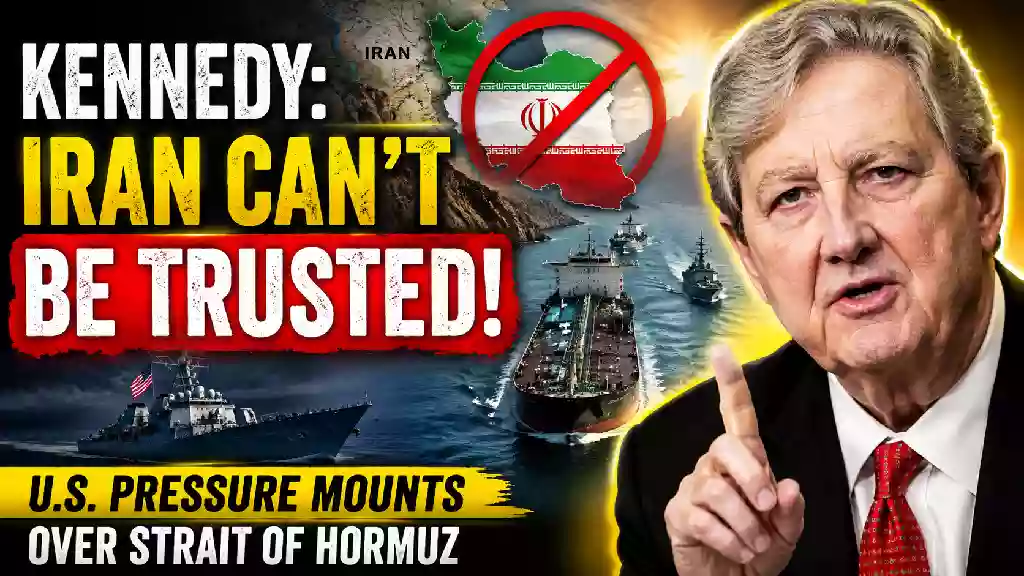
Sen. John Kennedy warns against trusting Iran as U.S. pressure continues over the Strait of Hormuz, with oil tankers and U.S. naval forces at the center of the ongoing geopolitical confrontation.
John Kennedy on Iran: US Pressure Mounts as Strait of Hormuz Remains Key Flashpoint
John Kennedy Warns Against Trusting Iran as US Pressure Mounts Over Strait of Hormuz
Kennedy Backs Continued Pressure on Iran
Louisiana Sen. John Kennedy says the United States should maintain its sanctions and naval blockade against Iran as Washington assesses the impact of its pressure campaign.
During the discussion, Kennedy pointed to the reported recovery of Persian Gulf oil exports to roughly two-thirds of their pre-war levels. The conversation also highlighted the role of U.S. forces in assisting commercial vessels traveling through the strategically important Strait of Hormuz.
According to figures cited during the interview, U.S. forces have helped nearly 1,500 commercial vessels transit the Strait, with those ships carrying approximately 750 million barrels of crude oil destined for global markets.
Kennedy described those developments as an important sign that the current strategy could be producing results.
Iran’s Oil Exports Remain at the Center of the Dispute
One of the most significant claims discussed in the interview was that Iran had exported zero oil from its shores since the naval blockade resumed in mid-July.
The transcript also cited Treasury Secretary Scott Besant as saying the United States had guided approximately 130 million barrels of oil through the region over a two-week period.
Those figures were used during the discussion to contrast the movement of international oil supplies with Iran’s reported lack of exports. Kennedy acknowledged that the exact amount of oil successfully moving through the Strait was not fully known.
The situation remains closely tied to global energy prices, with Kennedy acknowledging concerns about the impact of higher oil and gasoline prices on American consumers.
Kennedy Delivers Blunt Warning About Negotiating With Tehran
Kennedy took an especially hard line when discussing the possibility of reaching a deal with the Iranian government.
He argued that Washington should be cautious about trusting Iranian leaders and used the phrase “wild pack of howler monkeys” to characterize the difficulty of dealing with Tehran.
The colorful comparison reflected Kennedy’s broader argument that continued pressure may be preferable to relying on diplomatic assurances from the Iranian government.
He also argued that U.S. actions have already weakened Iran’s military capabilities and economy, claiming that the country could face years of difficulty recovering.
Strait of Hormuz Remains a Major Flashpoint
Despite the reported recovery in oil shipments, Kennedy acknowledged that the Strait of Hormuz remains the biggest challenge.
The waterway is central to the movement of energy supplies, meaning prolonged disruption could have consequences for countries that depend on oil transported through the region.
Kennedy argued that nations including China, Japan, South Korea and countries in Europe could eventually face pressure to become more involved if their energy supplies remain threatened.
He also suggested that, if the United States determines that its major objectives have been achieved, withdrawing American forces could eventually become an option.
Kennedy Rejects Sending U.S. Ground Troops
The senator also discussed possible military options, including the prospect of supporting Kurdish forces inside Iran.
Kennedy made clear that he was not recommending sending troops or adopting that strategy. Instead, he described it as one of the more dramatic possibilities that could potentially be considered.
He specifically stated that he would not send U.S. troops into Iran, while mentioning Kurdish forces as a possible alternative.
The comments underscore the uncertainty surrounding how the confrontation could ultimately end.
How Long Can Pressure on Iran Continue?
A major unanswered question is whether sustained economic and military pressure will force Iran to change course.
Kennedy argued that Iran is already under significant economic strain but acknowledged that the United States does not have unlimited time to wait for the pressure campaign to produce a final outcome.
For now, he believes the reported oil-flow figures provide reason to continue watching the strategy unfold.
The discussion emphasized that oil moving through the Strait while Iranian exports remain at zero could represent progress from Washington’s perspective, although the longer-term outcome remains uncertain.
U.S.-Iran Tensions Remain Unresolved
The interview ultimately paints a picture of an ongoing confrontation in which the United States is attempting to pressure Iran while keeping global energy supplies moving.
Kennedy’s comments suggest that sanctions, naval operations and economic pressure remain central to the strategy. At the same time, the continued importance of the Strait of Hormuz means the situation carries consequences well beyond the United States and Iran.
Whether the current approach leads to negotiations, further escalation or an eventual U.S. withdrawal remains unclear.
For now, Kennedy is arguing for patience and continued pressure, while the Strait of Hormuz remains one of the most important pressure points in the broader U.S.-Iran confrontation.
#JohnKennedy #Iran #StraitOfHormuz #IranSanctions #USNavy #IranBlockade #OilPrices #PersianGulf #MiddleEast #USIran #IranConflict