NYC Grocery Store Debate Sparks Concerns Over Government-Run Markets
NYC Grocery Store Debate Sparks Concerns Over Government-Run Markets
Harlem Business Owners Fear Economic Fallout as Mayor Pushes Forward With City-Owned Grocery Store Plan
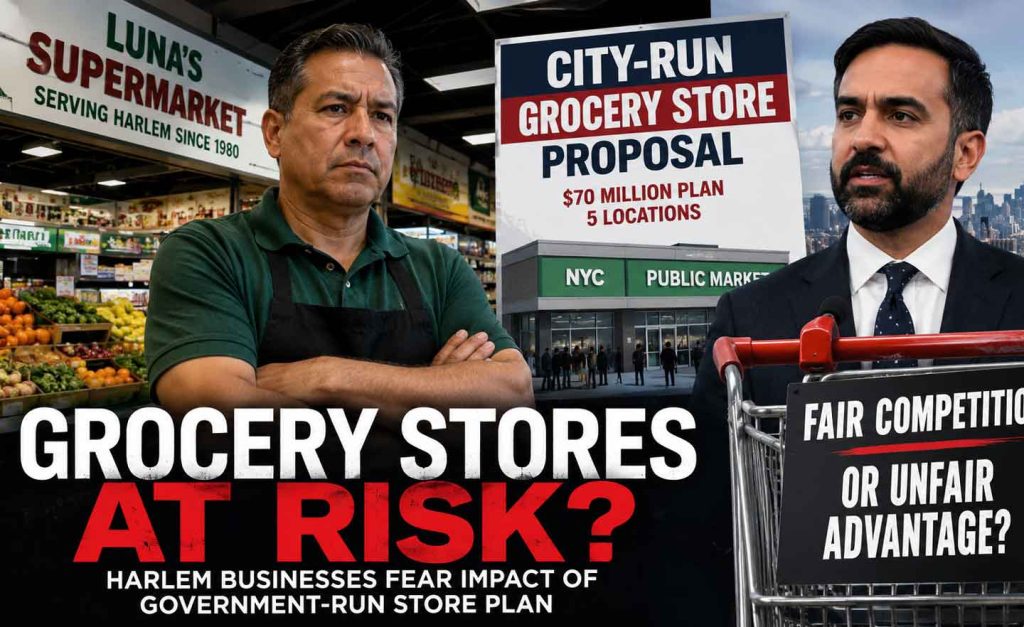
A heated debate is unfolding in New York City as Mayor Zohran Mamdani’s proposal to establish government-run grocery stores moves closer to becoming reality. The plan, which supporters say would lower food prices and improve access to groceries in underserved communities, is drawing sharp criticism from private grocery store owners who fear it could devastate their businesses.
The controversy centers around the mayor’s proposal to spend approximately $70 million on five city-operated grocery stores. One of the first planned locations is in Harlem, where several longtime independent supermarket owners say the move threatens decades of hard work and investment.
Harlem Grocery Owner Warns of Major Losses
One of the loudest voices opposing the proposal is Ruben Luna, a supermarket owner who immigrated to the United States at age 14 and began working in grocery stores shortly after arriving. Today, Luna owns 18 supermarkets, including three in Harlem located near the site of the proposed city-run store.
Luna says the government-backed competition would create an uneven playing field that private businesses simply cannot survive.
According to Luna, the city-operated grocery store would not face the same financial burdens as privately owned supermarkets, such as property taxes and utility costs, while also benefiting from taxpayer funding. He estimates that his stores could lose between 30 and 40 percent of their customers once the new location opens.
The veteran grocery owner fears the impact could force him to shut down locations and potentially lay off workers, putting at risk a business he spent more than four decades building.
Business Groups Seek Meeting With City Leaders
Minority-owned grocery store operators across New York City have reportedly been attempting to meet with city officials to express their concerns. A hearing before the city council is expected to determine whether the proposal moves forward.
Some business representatives recently met with the Speaker of the City Council and said they felt encouraged by the conversation, believing there may be support for reconsidering aspects of the proposal.
Still, Mayor Mamdani has consistently emphasized throughout his campaign that city-run grocery stores are a priority initiative aimed at addressing food affordability issues in New York City.
Critics Say Proposal Misunderstands Grocery Economics
Political commentators and economic analysts appearing on a recent television discussion argued that the proposal misunderstands how grocery pricing works in a competitive market.
Columnist Caroline Downey argued that grocery stores already operate on extremely thin profit margins, averaging around three percent. She said claims that private supermarkets are “price gouging” customers are misleading and ignore the financial realities of the grocery industry.
Downey also criticized the concept of taxpayer-funded grocery stores, warning that similar attempts have historically struggled or failed. She referenced an example in Baldwin, Florida, where a government-operated grocery store reportedly shut down after failing to become financially sustainable despite public subsidies.
Critics of the plan argue that increasing competition and encouraging private investment would be a more effective way to lower food prices rather than creating publicly operated markets.
Alternative Solutions Proposed
Some opponents of the proposal believe the city should instead offer incentives to private entrepreneurs willing to open stores in underserved neighborhoods.
Suggestions have included temporary tax breaks, reduced operating costs, or development incentives designed to encourage private grocery expansion into areas with limited food access. Supporters of this approach argue it would increase competition without risking taxpayer dollars on city-managed operations.
Others have suggested allowing larger national chains greater access within New York City’s boroughs to increase supply and reduce consumer prices through competition.
The debate has quickly become larger than grocery stores themselves, touching on broader ideological questions involving government intervention, capitalism, and the role of public spending in local economies.
Political Debate Expands Beyond Grocery Stores
The televised discussion later shifted toward national political issues, including election integrity legislation and voter ID laws. Commentators debated whether Congress should require stricter voter verification standards nationwide and whether federal pressure is needed to encourage states to clean up voter rolls.
Although separate from the grocery store issue, the broader conversation reflected the increasingly political nature of economic and policy debates currently unfolding across the country.
For Harlem business owners like Ruben Luna, however, the issue remains deeply personal. Many say they are not simply fighting against competition, but against what they see as government-funded competition that could erase years of investment, sacrifice, and community service.
As the New York City Council prepares to consider the proposal, both supporters and critics agree the decision could have long-lasting consequences for neighborhoods, local businesses, and the future role of government in everyday commerce.
#NewYorkCity #GroceryStores #Harlem #SmallBusiness #NYCPolitics #FoodPrices #GovernmentSpending #LocalBusiness #EconomicDebate #TaxpayerDollars #FreeMarket #RetailNews #Politics #BusinessNews #CityCouncil
Economic & Social Impact of the HOME Program Across Oklahoma
Banning Recognizes Beggs Community for Tornado Recovery Efforts