US Forces Shoot Down Iranian Drones Near Strait of Hormuz as Tensions Rise Despite Potential Peace Deal
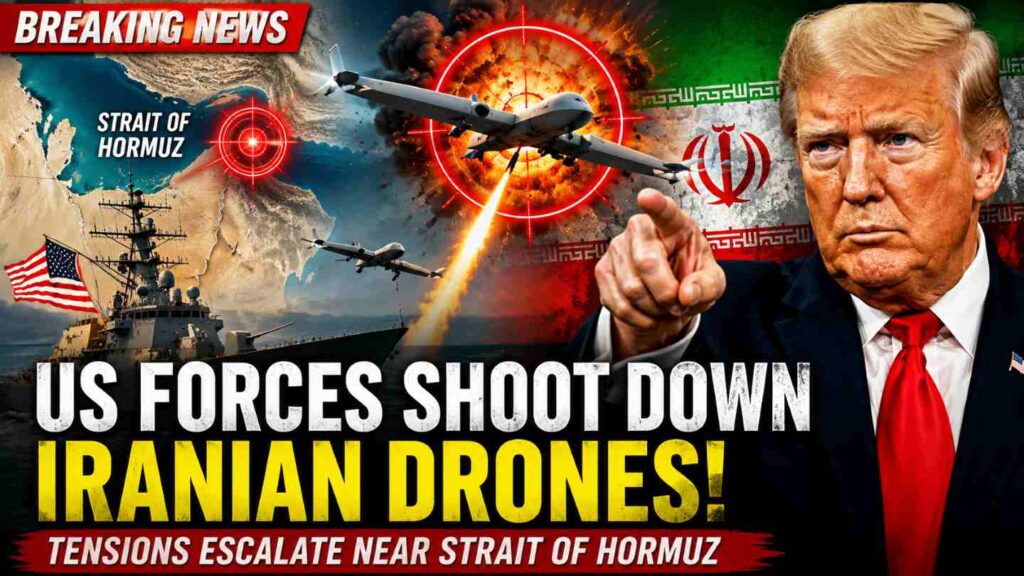
US Forces Shoot Down Iranian Drones Near Strait of Hormuz as Tensions Rise Despite Potential Peace Deal
US Military Intercepts Iranian Attack Drones Near Strategic Waterway
Tensions in the Middle East escalated once again after U.S. forces reportedly shot down two Iranian one-way attack drones near the strategically important Strait of Hormuz. The incident occurred despite recent indications that diplomatic negotiations between the United States and Iran may be making progress toward a potential peace agreement.
The Strait of Hormuz remains one of the world’s most critical maritime chokepoints, responsible for the transit of a significant percentage of global oil shipments. Any military confrontation in the region raises concerns about international trade, energy markets, and regional stability.
Trump Halts Planned Strikes Against Iran
In a surprising development, President Donald Trump announced that he had canceled previously scheduled military strikes against Iran following high-level diplomatic discussions. According to statements shared by the president, talks with Iranian leadership have advanced significantly and could result in a formal agreement in the coming days.
Trump expressed optimism that a memorandum of understanding between the United States and Iran could soon be finalized. The proposed agreement is expected to address several key issues, including regional security, sanctions relief, and Iran’s nuclear program.
The president emphasized that any future agreement would ensure that Iran never acquires nuclear weapons while also creating conditions that could stabilize oil markets and reduce geopolitical tensions.
Potential US-Iran Agreement Taking Shape
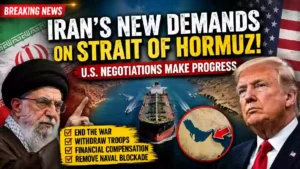
Reports from Iranian state media indicate that a draft agreement currently under discussion spans 14 pages and includes several major provisions. Among the reported elements are commitments by the United States to ease certain sanctions, release frozen Iranian assets, and potentially reduce military presence in the region.
However, officials from both sides have cautioned that no final deal has yet been reached. Critical negotiations regarding nuclear activities, economic sanctions, and regional security concerns remain unresolved.
The possibility of a breakthrough agreement has generated significant international attention, particularly among U.S. allies and neighboring Gulf nations that have been directly affected by the ongoing tensions between Washington and Tehran.
Strait of Hormuz Remains a Global Flashpoint
The recent drone incident underscores the fragile security situation in the Gulf region. The Strait of Hormuz serves as a vital corridor for global energy exports, with approximately one-fifth of the world’s oil supply passing through the narrow waterway.
Military officials reported that the Iranian drones were allegedly targeting commercial shipping vessels operating in the area. The successful interception by U.S. forces prevented potential damage to civilian maritime traffic and highlighted the ongoing risks facing international shipping companies.
Industry analysts note that disruptions in the Strait of Hormuz can have immediate consequences for global oil prices, supply chains, and economic stability.
Israel, Hezbollah, and Regional Security Concerns
Another major factor influencing negotiations is the broader regional security landscape. Israeli officials have expressed interest in ensuring that any future agreement effectively addresses Iran’s support for proxy groups operating throughout the Middle East.
Particular attention has been focused on Hezbollah, the Iran-backed organization based in Lebanon. Security experts argue that reducing regional tensions will require addressing the activities of armed groups that have contributed to instability and periodic conflicts with Israel.
Israeli Prime Minister Benjamin Netanyahu reportedly discussed the developing negotiations with President Trump and emphasized the importance of preventing Iran from advancing its nuclear ambitions.
Economic Implications of a Future Deal
One of the most closely watched aspects of the negotiations involves sanctions relief and the release of frozen Iranian assets. While Iranian officials reportedly seek immediate access to billions of dollars held overseas, U.S. negotiators are believed to favor a phased approach tied to compliance benchmarks.
Financial markets are monitoring developments closely. A successful agreement could increase Iranian oil exports, potentially influencing global energy prices and reshaping international trade relationships.
At the same time, critics argue that any release of funds must include safeguards to ensure resources are used for economic development rather than military activities or support for regional proxy organizations.
What Happens Next?
According to multiple reports, negotiations may continue over the coming days, with the possibility of a formal signing ceremony taking place in Europe. While optimism has increased on both sides, significant obstacles remain before a final agreement can be reached.
The recent downing of Iranian drones demonstrates that military tensions continue to simmer beneath ongoing diplomatic efforts. As world leaders closely monitor developments, the coming weeks could prove pivotal for the future of U.S.-Iran relations and broader Middle East stability.
Whether the emerging agreement succeeds or fails, the Strait of Hormuz will remain a critical focal point for global security, energy markets, and international diplomacy.
#USIran #StraitOfHormuz #IranDrones #MiddleEastNews #BreakingNews #DonaldTrump #GlobalSecurity #OilMarkets #MilitaryNews #IranDeal